
The First Day of School Isn't About Decorations. It's About Trust.
Jul 19, 2026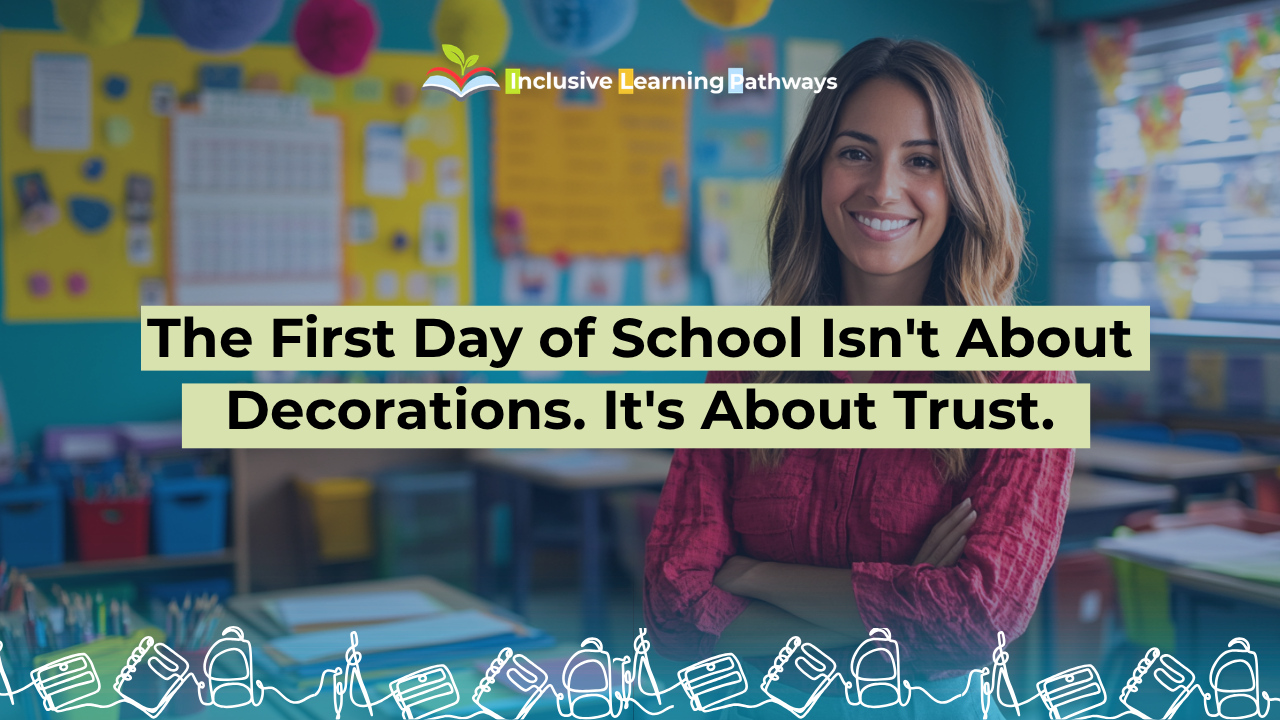
A Teacher's Guide to Starting the School Year Strong, from Inclusive Learning Pathways
Years ago, while studying to become a teacher, Kathy became fascinated with a topic most people brush past when reading about education: the first day of school. What she discovered became the foundation of Inclusive Learning Pathways today.
Kathy brings more than 30 years in the classroom, including special education, ESOL, and curriculum design. Cindy brings 20 years of experience in education to the organization. Our mission is to provide accessible, inclusive resources that help every student master the standards in front of them. What we teach on the first day and how we prepare for it shape everything we offer teachers this school year.
Quick Takeaways: First Day of School Checklist for Teachers
- Remember, students are silently asking: Am I safe here? Will my teacher like me?
- Set up the room to work for every kind of learner, not just to look decorated.
- Survey students ahead of time so you know their needs before they sit down.
- Teach routines on purpose. Don't assume students already know them.
- Build the relationship first. The rules can wait until day two.
- Reach out to parents on day one, not week three.
Students Aren't Just Learning Your Name
Most teachers think of the first day as a chance to get to know their students. But students walk in with their own questions running in the background: Will I be safe in this classroom? Will my teacher like me? Will I know what to do? Will I be embarrassed if I make a mistake? Will this classroom work with the way I learn?
In their book The First Days of School, authors Harry K. Wong and Rosemary T. Wong outline how teachers can prepare for that first day so students feel ready to succeed all year. The American Psychological Association backs this up: teachers who build strong relationships with their students see real impact on both academic and social development.
Get the Room Ready, Not Just Decorated
A classroom doesn't need to be picture-perfect for the first day. According to Brisk Teaching's back-to-school checklist, what matters more is functional: lighting at the right level, temperature set to a comfortable range, classroom technology tested with any work orders already submitted, and desks arranged in a way that works for every student's needs.
Design the Room for Every Kind of Learner
Classrooms should be ready to support every kind of learner from day one. That might mean a quiet spot for students who need a few minutes to decompress before lessons begin, or an area with extra activities for students who finish early. These small design choices reflect what Inclusive Learning Pathways stands for: classrooms built to include students of every background and learning style.
Know Your Students Before They Sit Down
Before the first day, send students or families a short survey to learn what each student needs. Are they working toward special education standards? Do they have allergies? Learning differences? Special needs? It also helps to review any notes passed along from a previous teacher or administrator before that first class begins.
Teach Routines on Purpose
Routines should be taught, not assumed. The Australian Education Research Organisation recommends spending real time on the first day building and teaching routines: how to use the restroom, how to ask for a break, what to do after finishing work early, how to transition between subjects, and how to show respect during discussions. Edmentum also suggests using a seating chart for the first few weeks. It helps you learn names faster and gives students a sense of stability.
Build the Relationship Before the Rules
Greet students by name as they walk in, learn how to pronounce it correctly, and share a little about yourself. Edmentum points to simple, low-pressure icebreakers as one of the easiest ways to help students of every comfort level feel included from the start.
Start the Parent Partnership on Day One, Not Week Three
Teachers build partnerships with parents too, not just students. Brisk Teaching recommends sending a short welcome message to families early on. It introduces you, explains how to reach you, and shows that you care about the whole student, not just their coursework.
Expect the Unexpected, and Protect Your Own Energy
The first day rarely goes exactly as planned. Edmentum notes that teachers should expect a few surprises: a student who isn't on the roster, technology hiccups, missing supplies, or a bit of friction between students. A simple low-tech backup plan and a few spare pens and notebooks go a long way.
Take care of yourself too. Keep snacks nearby, wear comfortable shoes, minimize surprises where you can, and have a low-tech lesson ready in case the Wi-Fi doesn't cooperate.
The Bottom Line
A classroom doesn't need to be perfect on the first day. It needs to be prepared. The routines you teach in those first hours become the foundation students lean on for the rest of the year.
That's exactly the belief Inclusive Learning Pathways was built on.
A Free Masterclass for Teachers Is On the WayKathy is building a free masterclass on using AI to plan inclusive lessons, prepare bilingual classroom resources, and set routines for every kind of learner, no tech background needed. Join the waitlist and we'll let you know the moment it's ready. Join the Waitlist → |
References
- Wong, H. K., & Wong, R. T. The First Days of School: How to Be an Effective Teacher. Harry K. Wong Publications. effectiveteaching.com/store/products/books/the-first-days-of-school-5th-edition
- American Psychological Association. “Improving Students' Relationships with Teachers.” apa.org/education-career/k12/relationships
- Brisk Teaching. “The Ultimate First-Day-of-School Checklist for Teachers.” briskteaching.com/post/back-to-school-teacher-checklist
- Edmentum. “Ten Teacher Tips for the First Day of School.” edmentum.com/articles/10-tips-for-the-first-day-of-school/
- Australian Education Research Organisation. “Teaching Routines: Their Role in Classroom Management.” edresearch.edu.au/summaries-explainers/explainers/teaching-routines-their-role-classroom-management